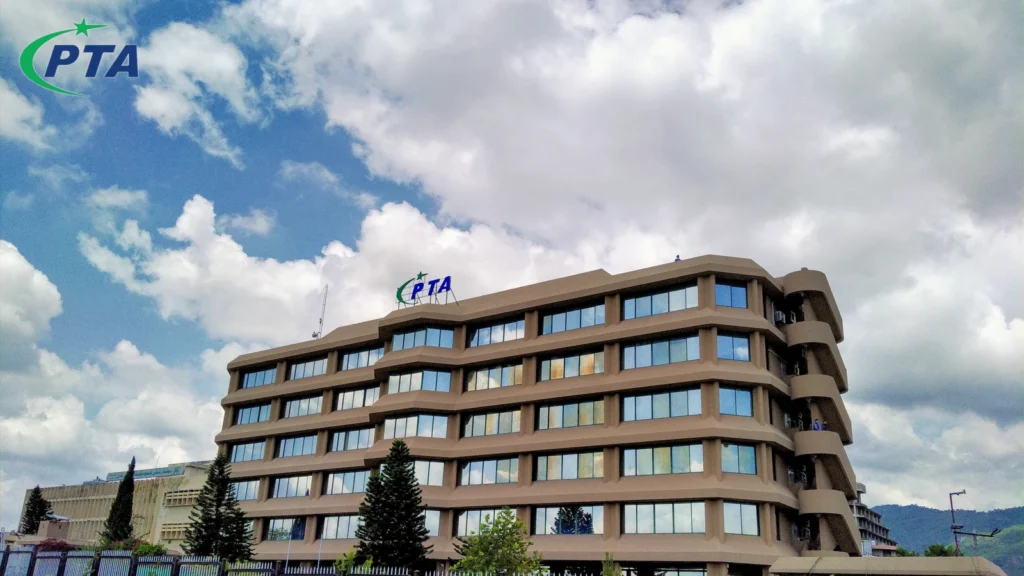
The Pakistan Telecommunication Authority (PTA) has announced a crackdown on unauthorised roadside SIM outlets that sell illegally issued SIM cards. The move was announced by the regulator’s Director General (Enforcement), Amer Shahzad, during a meeting with telecom operators in Multan, and was reported on 22–23 November 2026.
The announcement matters to every mobile user in the country. A SIM bought from an unauthorised seller can be registered in someone else’s name, blocked without warning, or misused for fraud — and the person whose identity is attached to it can end up facing the consequences. This article explains what PTA announced, why it is acting now, and what you should do before buying your next SIM.
What PTA Announced
According to the reports, PTA is launching a crackdown on roadside SIM-selling points to stop the sale of illegal SIM cards and to make sure SIMs are sold only through authorised outlets. The focus is on informal sellers — the stalls and small shops by the roadside — rather than the registered franchises and service centres of the licensed mobile operators.
Amer Shahzad, PTA’s Director General (Enforcement), said the government attaches great importance to the digital economy, which depends on reliable telecom infrastructure and widespread internet connectivity. He linked the crackdown to the government’s vision of a cashless economy, arguing that digital payments can only grow if the networks behind them are trustworthy — and a network is only trustworthy if every connection on it is properly registered.
The announcement came after a meeting in Multan with representatives of Cellular Mobile Operators (CMOs), Fixed Local Loop (FLL) operators, Class Value Added Services (CVAS) data providers, and district-level Class Licensees. The meeting covered their operational problems and the benefits of the new licensing framework. Shahzad also directed mobile operators to ensure reliable voice and data connectivity, adequate network coverage, regular performance monitoring, and timely fixing of coverage gaps and network congestion.
Why Illegal SIMs Are a Problem
An illegally issued SIM is one that was not sold and registered through the proper process. In practice, that usually means one of a few things: the SIM was activated against someone else’s identity, it was issued without proper biometric verification, or it was sold by a seller who is not authorised to issue SIMs at all.
The risks are real and well documented. A SIM that is not in your name can be switched off by the operator or blocked by PTA at any time, and you will have no record to prove it was yours. Worse, if a SIM registered in your name is used for fraud, harassment or another crime, investigators will come to you first. PTA has repeatedly warned that the person a SIM is registered to is responsible for how it is used.
Illegal SIMs are also a tool for organised fraud. They are used for fake calls, phishing messages, and scams that target bank accounts and mobile wallets — the very digital payments the government wants people to trust. That is why PTA treats this as a security issue, not just a paperwork problem.
This is not PTA’s first step against illegal SIMs. In the first seven months of 2026, more than 1.83 million SIM connections linked to registration violations were blocked, according to reports. Earlier in November, PTA also warned the public against buying and selling foreign SIM cards, calling the practice illegal, and separately advised citizens to share their fingerprints only at authorised customer service centres, franchises or approved sales outlets when getting a new SIM.
What the District-Level Licensing Means
Alongside the crackdown, PTA highlighted a licensing facility called District-Level Internet Services Class Licensing. PTA introduced this licensing at the beginning of 2026, with an initial fee of Rs 300,000, to help telecom services expand and improve connectivity at the grassroots level. Reports at the time of launch put the licence validity at 10 years, with a first-year annual fee of Rs 100,000, and a scope limited to internet services within a single district.
Operators have been given three months to take up the licensing facility. Shahzad told operators to approach him directly if they face any difficulties in doing so.
The idea behind the licence is simple: instead of internet services being controlled only by a few large companies, smaller operators can get licensed to serve a single district. That should bring proper, licensed internet to towns and villages that big operators have been slow to reach. The Punjab Information Technology Board (PITB) has also been tasked with connecting every town and village of Punjab with internet services, and the World Bank was scheduled to meet PITB to discuss the initiative.
The two announcements fit together. On one side, PTA is pushing more licensed providers into smaller areas so people have a legal way to get connected. On the other side, it is closing down the unlicensed route — roadside SIM sellers who operate outside the system. The message to the market is that there will be a legal path for everyone, and no room for those who stay outside it.
What This Means for SIM Buyers
For most people, the practical effect is straightforward: buy your SIM only from an authorised outlet. That means an operator’s own service centre, a registered franchise, or an approved sales outlet of Jazz, Zong, Telenor or Ufone. A roadside stall may be cheaper or faster, but the SIM you get there may not be properly registered in your name — and you may only discover the problem when the number stops working or when a fraud complaint lands on your CNIC.
Here is what to check before you buy a SIM:
- Buy from an authorised outlet only. If the seller cannot show that they are an authorised franchise or sales point of the operator, walk away.
- Give your fingerprints only at the outlet, for the SIM you are buying. PTA has specifically warned citizens to confirm the exact purpose for which their fingerprints are being collected before giving them, and never to share biometric information with unauthorised people.
- Make sure the SIM is activated in your own name and on your own CNIC. Never buy a SIM that is already active, and never buy one registered in someone else’s name, even if the seller says it is “ready to use”.
- Check your SIM count after buying. Send your 13-digit CNIC number (without dashes) by SMS to 668, or check online at cnic.sims.pk. The reply shows how many SIMs are registered on your CNIC, broken down by network. If the count went up by more than one after buying a single SIM, act immediately.
- Keep the receipt and the SIM jacket. If anything goes wrong later, these are your proof of purchase.
- Never share your OTP with anyone. PTA has warned about fraudsters who pose as courier-company representatives to trick people into sharing one-time passwords. No real operator or courier will ever ask for your OTP.
It is also worth checking your SIM count every few months, even if you have not bought a new SIM. If a number you do not recognise appears on your CNIC, visit the operator’s service centre with your original CNIC and ask for it to be blocked after a fingerprint check. Under the current rules, one CNIC can hold up to five voice SIMs and three data SIMs across all networks, so an unexpected extra connection is easy to spot if you check regularly.
How This Is Different From PTA’s Other Recent Actions
PTA has made several announcements in recent weeks, and it is easy to mix them up. This crackdown is a separate action from the others:
- The SIM-limit proposal is about how many SIMs one person is allowed to hold. That proposal is still under discussion and is a different matter from shutting down unauthorised sellers.
- The 226-site inspection was a field survey of mobile towers and network quality in 16 cities, checking batteries, generators and power problems at tower sites. It was about network infrastructure, not SIM sales.
- The foreign SIM warning (early November) declared the buying and selling of foreign SIM cards illegal and warned of security risks. It targets a different kind of illegal SIM — one issued abroad — while this crackdown targets roadside sellers of locally issued SIMs.
- The illegal internet providers crackdown is a separate enforcement drive, discussed at a PTA meeting in Islamabad, against unlicensed internet service providers. It is connected to the same district licensing framework, but it targets internet operators, not SIM sellers.
What ties all of these together is a single direction: PTA is tightening the rules so that every connection — mobile or internet — runs through a licensed, registered channel.
What Is Not Yet Known
The reports so far leave several important questions unanswered, and readers should not assume details that have not been announced:
- Enforcement details: The reports do not describe how the crackdown will be carried out — whether it will involve raids, registration checks, fines, or arrests — or when it will start in each city.
- Penalties: No fines or punishments for unauthorised sellers have been spelled out in the reports available so far.
- Existing SIMs: It is not clear whether the crackdown will change how existing connections are checked, or whether people who already bought SIMs from roadside sellers will be asked to re-verify them.
- Licence conditions: The full conditions attached to the district-level licence have not been published in these reports.
Until PTA issues a formal press release or public notice with these details, the safest course for readers is to follow the guidance above: buy only from authorised outlets, verify your SIM count, and keep your purchase records.
Frequently Asked Questions
What is PTA’s crackdown on unauthorised SIM outlets?
PTA has announced action against roadside SIM-selling points that sell illegally issued SIM cards. The aim is to make sure SIMs are sold only through authorised outlets of the licensed mobile operators.
Who announced the crackdown?
PTA Director General (Enforcement) Amer Shahzad announced it during a meeting with telecom operators in Multan. It was reported on 22–23 November 2026.
Can I still buy a SIM from a roadside seller?
You should not. PTA says SIMs must be sold only through authorised outlets. A SIM from an unauthorised seller may not be registered in your name and can be blocked or misused.
How do I check how many SIMs are registered on my CNIC?
Send your 13-digit CNIC number without dashes by SMS to 668, or enter it at cnic.sims.pk. Both show a count of SIMs on your CNIC, broken down by network. They do not show the mobile numbers themselves.
What should I do if I find a SIM on my CNIC that is not mine?
Visit the operator’s service centre with your original CNIC and ask for the unknown SIM to be blocked after a fingerprint check. You can also report it through PTA’s official complaint channels.
What is District-Level Internet Services Class Licensing?
It is a PTA licence that lets smaller operators provide internet services within a single district. It was introduced at the beginning of 2026 with an initial fee of Rs 300,000, and operators have been given three months to take it up.
Conclusion
PTA’s crackdown on unauthorised SIM outlets is a straightforward message: from now on, a SIM should come only from an authorised seller, registered in your own name, with your own fingerprints. The crackdown sits alongside the district-level licensing push, which is meant to give smaller towns a legal route to proper internet service.
For mobile users, the advice is simple and costs nothing to follow. Buy from authorised outlets, check your SIM count on 668 or cnic.sims.pk after every purchase, and never share your fingerprints or OTP with someone you cannot verify. A few minutes of checking can save you from losing a number — or from being held responsible for a SIM you never knew existed.