
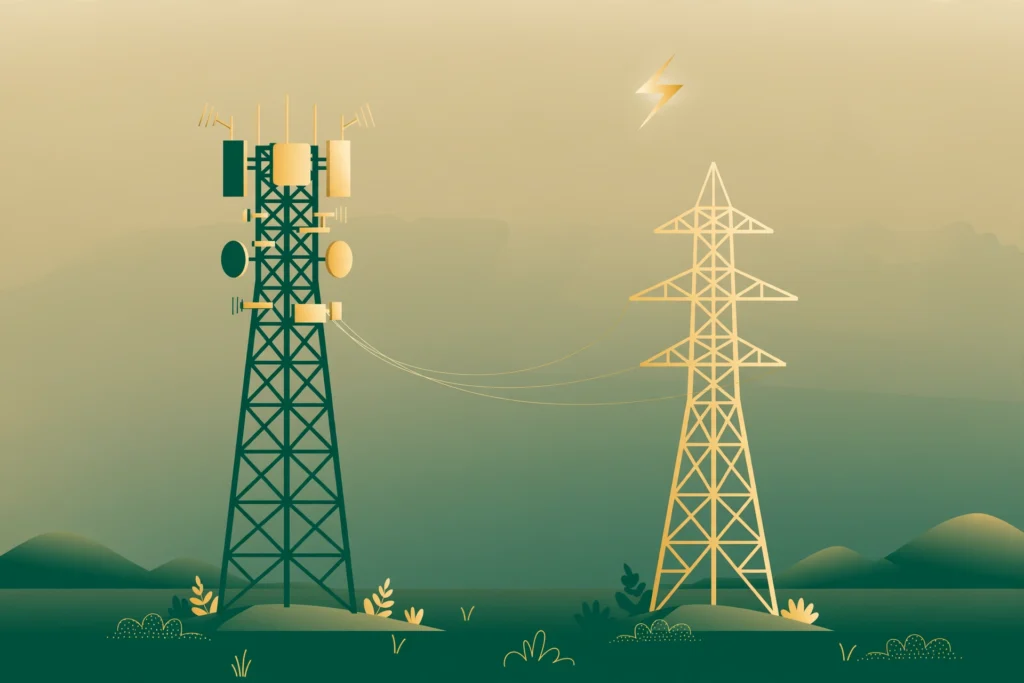
Pakistan’s telecom operators have written a joint letter to Prime Minister Shehbaz Sharif, asking that industrial electricity tariffs be applied to telecom network infrastructure. The letter, signed by the chief executives of Jazz, Zong (CMPak), Ufone and Telenor (PTMIL), and PTCL, warns that rising energy costs are putting investment in 5G, fibre networks, and data centres at risk. The request comes at a time when the sector is delivering record export earnings, yet still paying commercial electricity rates at its tower sites and network facilities.
What the Operators Asked For
In the joint letter, the operators asked the government to extend industrial electricity rates to licensed telecom infrastructure, or to create a dedicated “Digital/Telecom Infrastructure” electricity category with a clear implementation timeline for the power distribution companies.
Their argument is straightforward: government policy already recognises telecom as an industry. The Mobile Cellular Policy 2004 and the Finance Act 2021 included PTA-licensed operators in the definition of an industrial undertaking for tax purposes. If the sector counts as an industry for taxation, the operators argue, it should also count as one at the electricity meter. Corporate offices, customer service centres, franchises, and retail outlets would stay on commercial rates — only network assets such as towers, switching centres, exchanges, fibre nodes, network operation centres, and data centres would qualify, with eligibility certified by the PTA to prevent misuse.
Why Power Costs Threaten 5G and Fibre
The operators’ case rests on cost figures quoted in the letter. According to the industry, commercial electricity tariffs for telecom sites have risen about 197 percent since 2018, while fuel costs have climbed roughly 300 percent over the same period. Average revenue per user, meanwhile, has fallen by about 22 percent. The companies also point to a 5 percent withholding tax burden on the sector.
These are the industry’s own claims, made in advocacy to policymakers, rather than an independently audited account. But they explain the timing: costs keep climbing while per-user income falls, and the operators say the squeeze is directly slowing the rollout of next-generation networks.
To back their demand, the operators linked it to a pledge of $2 billion in investment over the next three years toward 5G infrastructure, fibre expansion, and AI-ready Tier-III data centres. Cheaper grid power, they argue, would free up resources for rural connectivity and fibre-to-the-home expansion, and encourage greater reliance on grid electricity — projecting grid utilisation gains of 15 to 20 percent.
The Telecom Amendment Bill 2026
The tariff demand is not the only reform on the table. The reintroduced Telecom Amendment Bill 2026 was referred to the Senate Standing Committee on Information Technology and Telecommunication this week, where it will now be reviewed.
This push did not appear overnight. In January 2026, the Ministry of IT and Telecommunication issued a directive around the IMT spectrum auction calling for a joint task force to examine industrial power tariffs, smart-grid solutions, and dedicated feeders for telecom networks. The task force held its first meeting in August 2026, with representatives from MoITT, the Power Division, NEPRA, the PTA, operators, and distribution companies. Progress has been uneven: in September 2026, NEPRA declined to grant industrial power tariffs to the sector, prompting a parliamentary committee to summon the regulator’s officials for an explanation.
What It Means for Consumers
For mobile users, the stakes are practical. If power costs stay high, the operators argue, 5G deployment and fibre expansion slow down — meaning slower improvements in coverage, speed, and reliability. If the tariff is granted, the ministry has said it would pressure operators to reinvest the savings into backup batteries to keep towers running during power outages, which could mean fewer signal drops during load-shedding.
No decision has been announced yet. The matter sits with the Ministry of IT and Telecommunication, the Power Division, and NEPRA.
The backdrop makes the decision harder to ignore: Pakistan’s IT and telecom exports hit $1.25 billion in the first quarter of FY27, up 17.7 percent year-on-year, according to the State Bank of Pakistan. The sector now makes up nearly 46 percent of the country’s total services exports. Whether the government treats telecom as an industry at the electricity meter, and not just on paper, will be an early test of how seriously it takes that growth story.
FAQs
What are telecom operators asking from the government?
They have jointly asked Prime Minister Shehbaz Sharif to extend industrial electricity tariffs to telecom network infrastructure, or create a dedicated telecom electricity category.
Why do operators say telecom deserves an industrial tariff?
They argue the sector is already recognised as an industry under the Mobile Cellular Policy 2004 and the Finance Act 2021, yet is billed at higher commercial electricity rates — a mismatch they want corrected.
How would cheaper electricity help consumers?
The operators say it would free up money for 5G rollout, rural coverage, and fibre-to-the-home expansion, and that the government would push them to reinvest savings into backup batteries so towers keep working during power outages.
Has the government decided on the request?
No decision has been announced yet. The matter is with the Ministry of IT and Telecommunication, the Power Division, and NEPRA.
What is the Telecom Amendment Bill 2026?
It is a reintroduced telecom reform bill that has been referred to the Senate Standing Committee on Information Technology and Telecommunication for review this week.
Conclusion
The joint letter marks a fresh escalation in the industry’s long-running campaign for fairer power rates. With $2 billion in investment pledged, record export earnings, and the 5G spectrum auction in the background, the pressure on the government to act is real. But the final call belongs to the policymakers and the regulator — and until they decide, Pakistan’s telecom sector will keep paying industry costs on paper and commercial rates at the meter.