Pakistan is considering international arbitration against Etisalat to recover about $800 million still unpaid from the 2005 sale of Pakistan Telecommunication Company Limited (PTCL), along with the opportunity cost since 2008 and applicable damages. The matter came up on Tuesday, 4 November 2026, at a joint meeting of the Senate standing committees on information technology and privatisation, where members were told that the federal cabinet has directed the Office of the Attorney General for Pakistan to implement its decision at the earliest under Rule 24 of the Rules of Business, 1973.
It is important to be precise about where this stands: Pakistan has not yet filed an arbitration case, and it has not won any money. What has happened is that a committee formed in July 2026 recommended arbitration after 20 years of dispute, and the government is now weighing that recommendation, with the Attorney General first assessing the strength of the case before any Notice of Intent is issued to Etisalat. The story matters because it involves one of the largest privatisation deals in Pakistan’s history, and because the unpaid balance has been stuck for nearly two decades over a property dispute that was never fully resolved.
The 2005 PTCL Sale
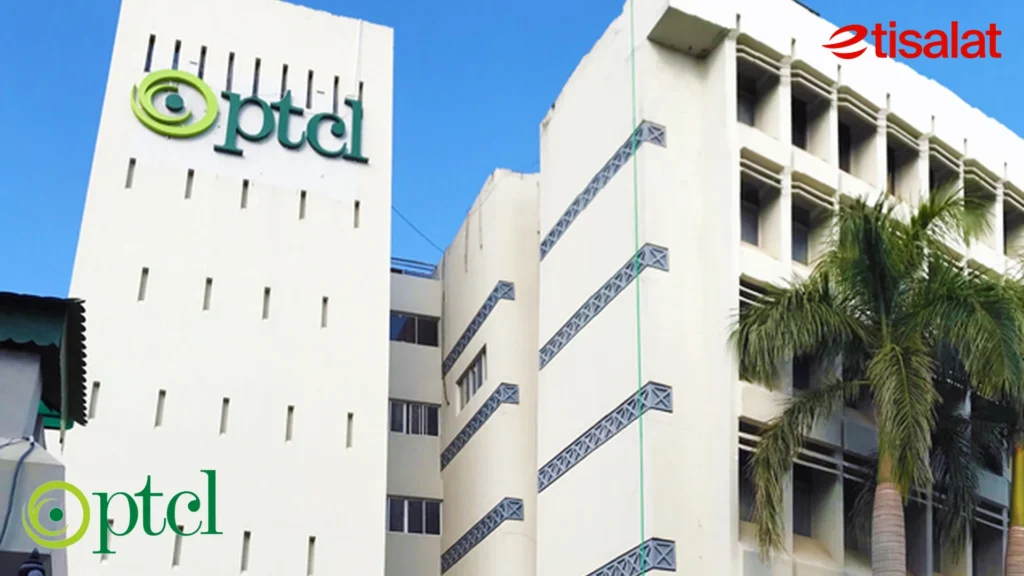
In 2005, the government sold a 26 percent stake in PTCL, along with management control of the company, to Etisalat International Pakistan, the UAE-based telecom group now known as e&. The total price was $2.59 billion. Of that sum, $1.76 billion has been received, while about $800 million remains unpaid.
The payment was linked to the transfer of PTCL properties to the new management. According to a Ministry of Privatisation briefing seen by Dawn, 99 percent of the properties have been transferred, but 32 of the 3,246 properties remain untransferred. Etisalat has withheld the balance because of these pending transfers. That is the core of the dispute: the government says the money is owed, while Etisalat has pointed to the untransferred properties as the reason for holding back payment.
What Happened at the Senate Meeting
The joint meeting was chaired by Dr Afnanullah Khan, chairman of the privatisation committee, and Palwasha Khan, chairwoman of the IT and telecommunications committee. IT Secretary Zarrar Hasham Khan described the agenda item as sensitive and asked that unauthorised persons, including media representatives, leave the room. The proceedings were then held in camera.
Senators from both committees said they had not been given access to the sale purchase agreement covering the transfer of the PTCL stake and management control. One senator said parliament should be informed about the sale of national assets through legislation rather than relying on bureaucrats and officers. The lack of access to the agreement itself became a point of complaint, and it underlines how much of this 20-year dispute has played out behind closed doors.
The Road to Arbitration
The ministry told the committees that the government has made extensive efforts since 2015 to resolve the post-privatisation issues, including forming several committees and negotiating with Etisalat. None of those efforts closed the dispute. In July 2026, another committee was formed under the prime minister’s adviser on privatisation, with representatives from the ministries of IT and law and the Attorney General’s office.
Citing the 20-year history of the dispute, that committee recommended that Pakistan pursue international arbitration as provided under the sale purchase agreement, to recover the $800 million, the opportunity cost since 2008 and damages. It also recommended that the Attorney General assess the strength of the case, its prospects of success and the legal implications. The value of the additional claim for opportunity cost and damages has not yet been determined, so no total figure beyond the $800 million principal should be quoted.
The briefing stated that, if the merits permit arbitration, the Attorney General should seek approval from the prime minister or the federal government before issuing a Notice of Intent to Etisalat. The Privatisation Division told the committees that a summary has been submitted to the federal cabinet. In plain terms, the sequence is: assess the case, get government approval, then formally notify Etisalat. None of those steps beyond the committee recommendation has been confirmed as complete.
What This Means for Telecom Users
For ordinary mobile and broadband users in Pakistan, this dispute has no direct effect on current tariffs or services. It will not lead to refunds, cheaper packages or changes to Jazz, Ufone, Telenor or Zong services, and readers should be wary of any social media claim suggesting otherwise. PTCL’s current operations, and the services of the mobile operators, are separate from this privatisation proceeds dispute.
What it does affect is public money. If arbitration succeeds, the recovered amount would go to the state, not to subscribers. If it fails, or if it drags on for more years, the dispute will remain one of the longest-running loose ends from Pakistan’s privatisation era. Either way, the case is a reminder of how property transfer issues, which sound like paperwork, can hold up hundreds of millions of dollars for decades when they are not resolved at the time of a sale.
What to Watch Next
The next concrete step to watch is whether the Attorney General completes the merits assessment and whether the prime minister or the federal government approves issuing a Notice of Intent to Etisalat. Until that notice is issued, the arbitration is a recommendation under consideration, not a filed case. The Senate committees are also likely to press again for access to the sale purchase agreement, since members made clear they want to see the document behind a deal of this size.
FAQs
How much does Etisalat still owe from the PTCL sale?
About $800 million of the $2.59 billion price remains unpaid. Pakistan has received $1.76 billion so far.
Why has the $800 million not been paid?
Payment was linked to the transfer of PTCL properties. Of 3,246 properties, 32 remain untransferred, and Etisalat has withheld the balance over those pending transfers.
Has Pakistan filed an arbitration case against Etisalat?
No. A committee formed in July 2026 recommended international arbitration, and the government is considering that recommendation. The Attorney General must first assess the case and get government approval before issuing a Notice of Intent.
What else is Pakistan seeking besides the $800 million?
The committee recommended seeking the opportunity cost since 2008 and applicable damages as well, but the value of that additional claim has not been determined.
Will this affect mobile or PTCL service prices?
No. This is a dispute over privatisation proceeds owed to the state. It has no direct effect on current tariffs or services for users.
When was PTCL sold to Etisalat?
In 2005, when Etisalat International Pakistan bought a 26 percent stake in PTCL along with management control for $2.59 billion.
Conclusion
Twenty years after the PTCL sale, the $800 million balance remains unpaid, stuck on 32 untransferred properties out of 3,246. The July 2026 committee’s recommendation gives the government a clear path to international arbitration, but the path still runs through a merits assessment and formal government approval before any case is filed. For now, the honest description is that Pakistan is preparing and considering arbitration, not that it has already gone to arbitration. The next announcement that matters will be the Attorney General’s assessment and the government’s decision on the Notice of Intent.